

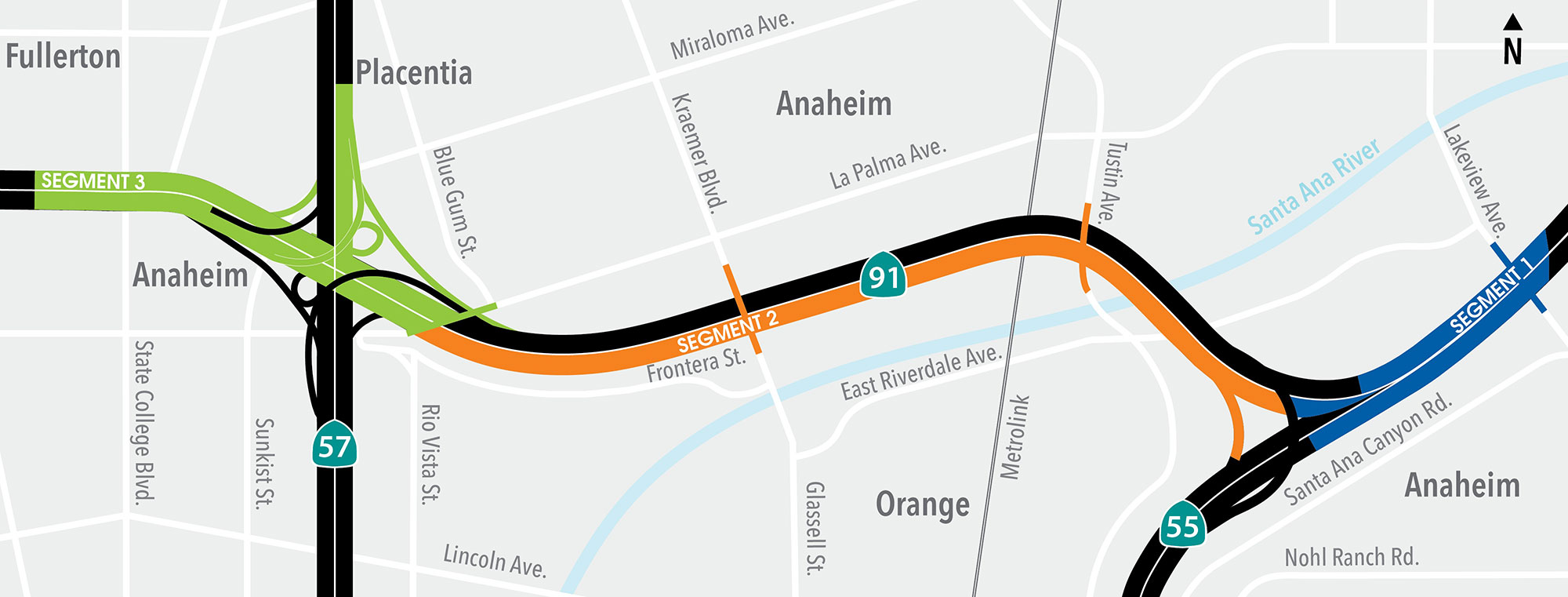
California State Route 91 is an east-west route that runs from Gardena to Riverside in Southern California, and California State Route 55, a north-south route, traverses Orange County. The two state routes intersect in Anaheim, just a couple miles south of the Santa Ana River. To improve the safety of the roadways where the two state routes meet, the SR 91 Improvement Project covers 6.6 miles of the route, in three segments, through Anaheim, Fullerton, Orange, Placentia, and Yorba Linda.
Driving the Project Forward
The entire SR 91 Improvement Project (all three segments) has a price tag of $779 million, with Segment 1 coming in at $78 million. Caltrans and the Orange County Transportation Authority (OCTA) are working on the first of the three segments with general contractor Granite Construction. Work began in spring 2025 and is on schedule to finish in fall 2027.
Highly Trafficked Area
The area where the state routes converge has an average daily traffic of up to 321,000 commercial and personal vehicles, typically traveling between Los Angeles and inland points to the east.
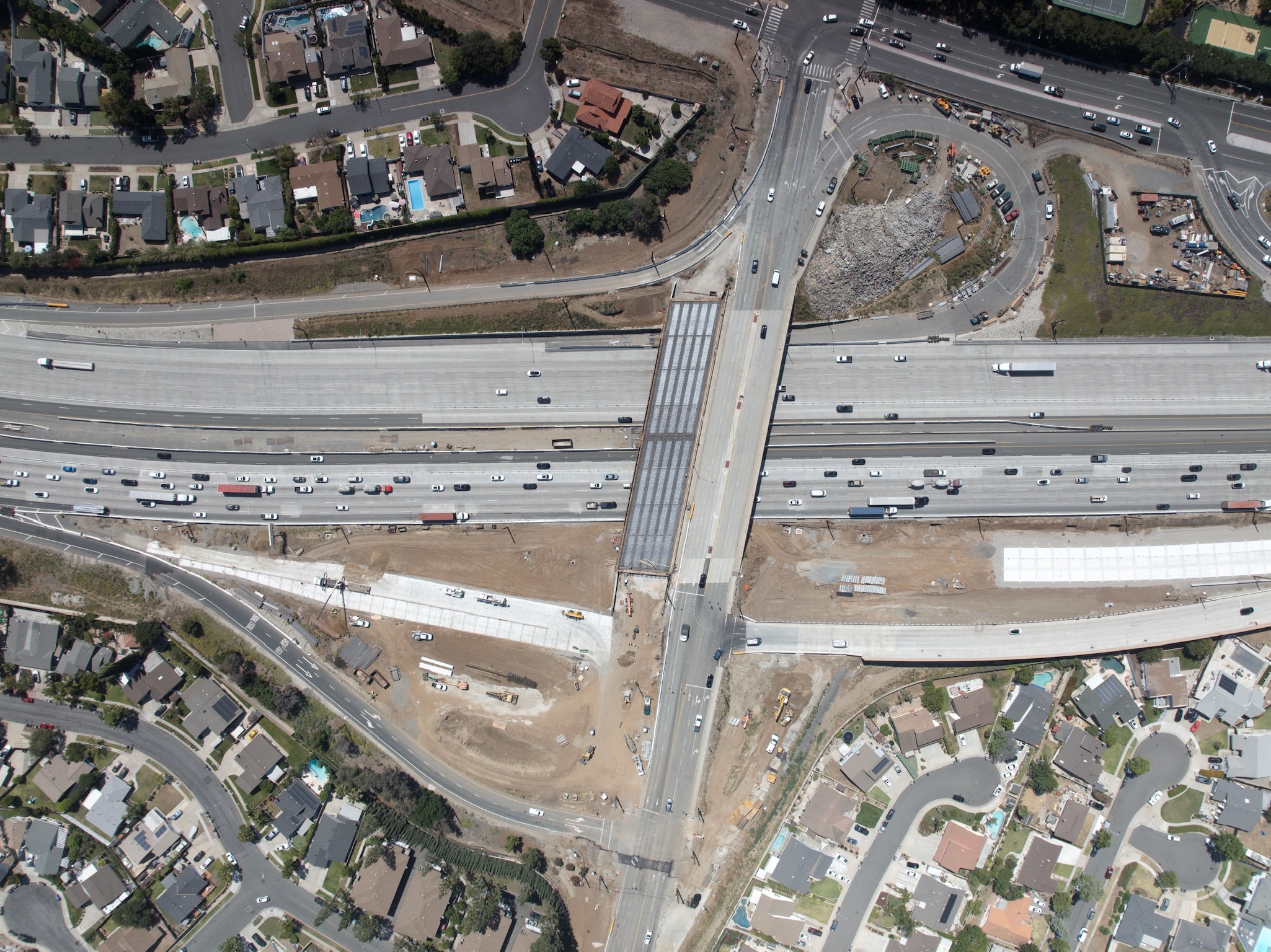
An overhead view of the new east portion of the Lakeview bridge under construction.
Many drivers enter SR 91 from Lakeview Avenue and travel west to get onto SR 55. To make the exit to SR 55, drivers need to cross four lanes of traffic in less than half a mile. Accidents are common in the area, and traffic backs up five miles when they occur. One of the key goals of the project is to reduce weaving and merging between ramps and interchanges, thereby smoothing traffic flow and enhancing safety.
Scope of work in the first segment, the SR 91/Lakeview Avenue Interchange, includes:
- Reconstructing the Lakeview Avenue overcrossing to include standard lanes, shoulders, and sidewalks in each direction;
- Realigning the westbound SR 91 on-ramp at the Lakeview interchange;
- Adding a new on-ramp from Lakeview connecting directly to SR 55; and
- Separating westbound SR 91 and southbound SR 55 traffic.
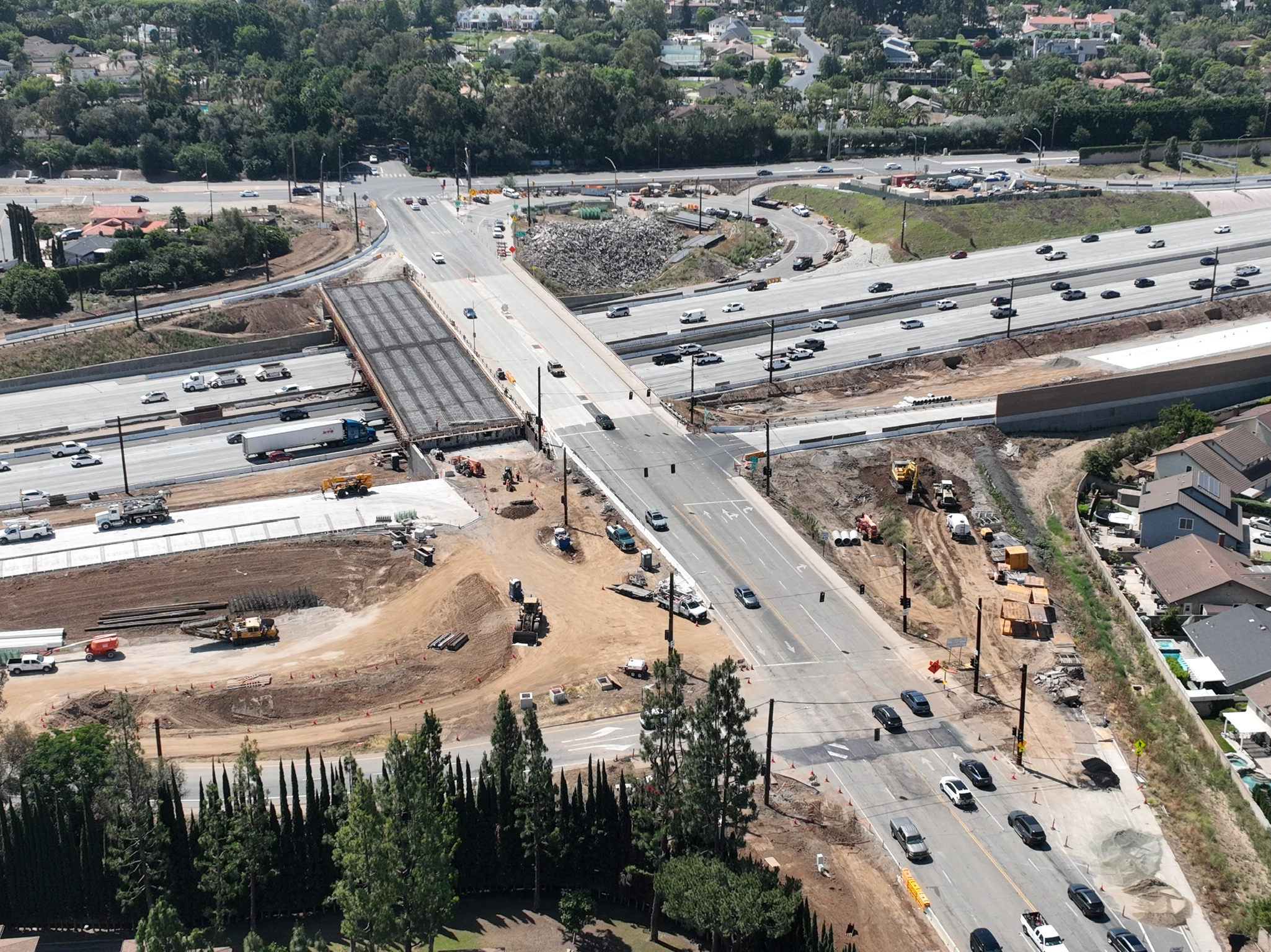
Traffic continues to flow unabated over the Lakeview bridge while construction takes place.
Granite’s initial project work involves the demolition and reconstruction of a 320-foot-long concrete bridge. “We’re reconstructing the bridge in two halves,” Granite Project Manager Michael Kuhns said. “We’re going to construct the east half, demolish the original bridge, and then construct the west half of the new bridge.”
The team will then connect the west and east halves by constructing a concrete closure connection. The new bridge will be wider and longer than the original bridge (110 feet wide by 320 feet long, compared to 80 feet wide by 296 feet long). The increased size is designed to help minimize congestion and simplify the merge. The bridge is being built on 324 35-foot-long steel piles driven into the ground with a hammer attachment mounted on a large crane. Once installed, the piles will help to support the bridge’s footing foundations.
The larger bridge will increase traffic capacity and can support a dedicated drop ramp that connects from the west side of the new Lakeview bridge to the leftmost westbound lane of SR 91. This will allow motorists heading toward SR 55 to safely traverse the half mile of SR 91 between Lakeview Avenue and SR 55 without having to cross multiple lanes of traffic on SR 91.
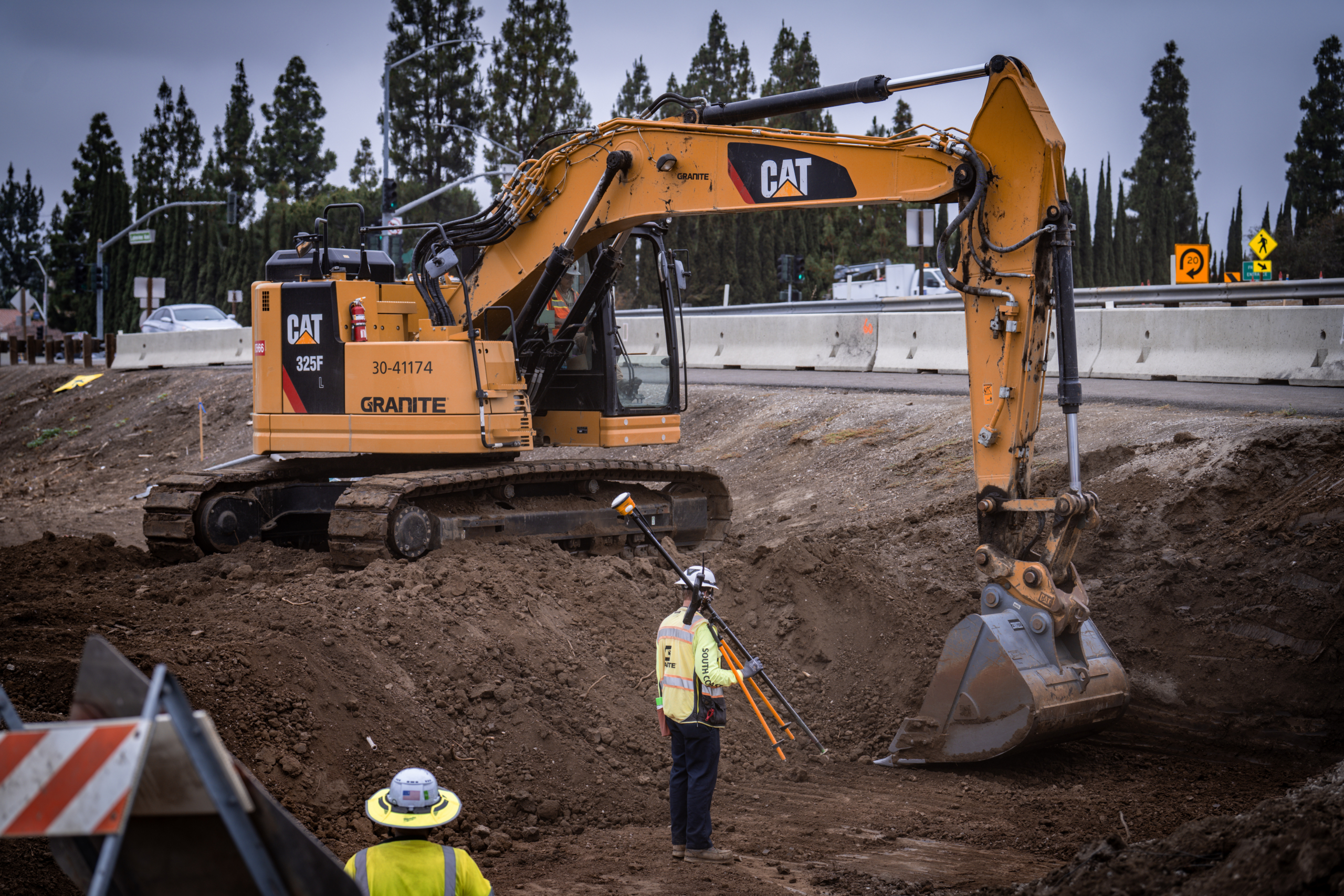
Excavation underway to establish the grade for a new exit ramp
The team is also installing 3,000 feet of retaining walls and sound walls. The retaining walls will support the newly widened and reconfigured alignment of SR 91. The new configuration will make room for the dedicated SR 55 drop ramp. In addition, work will include upgrades to storm drainage and electrical systems.
Safety at Every Stage
Safety is a key driver in the project. The challenge of maintaining a safe work zone for the crew and drivers is elevated, as the team is working within tight confines and restrictions.
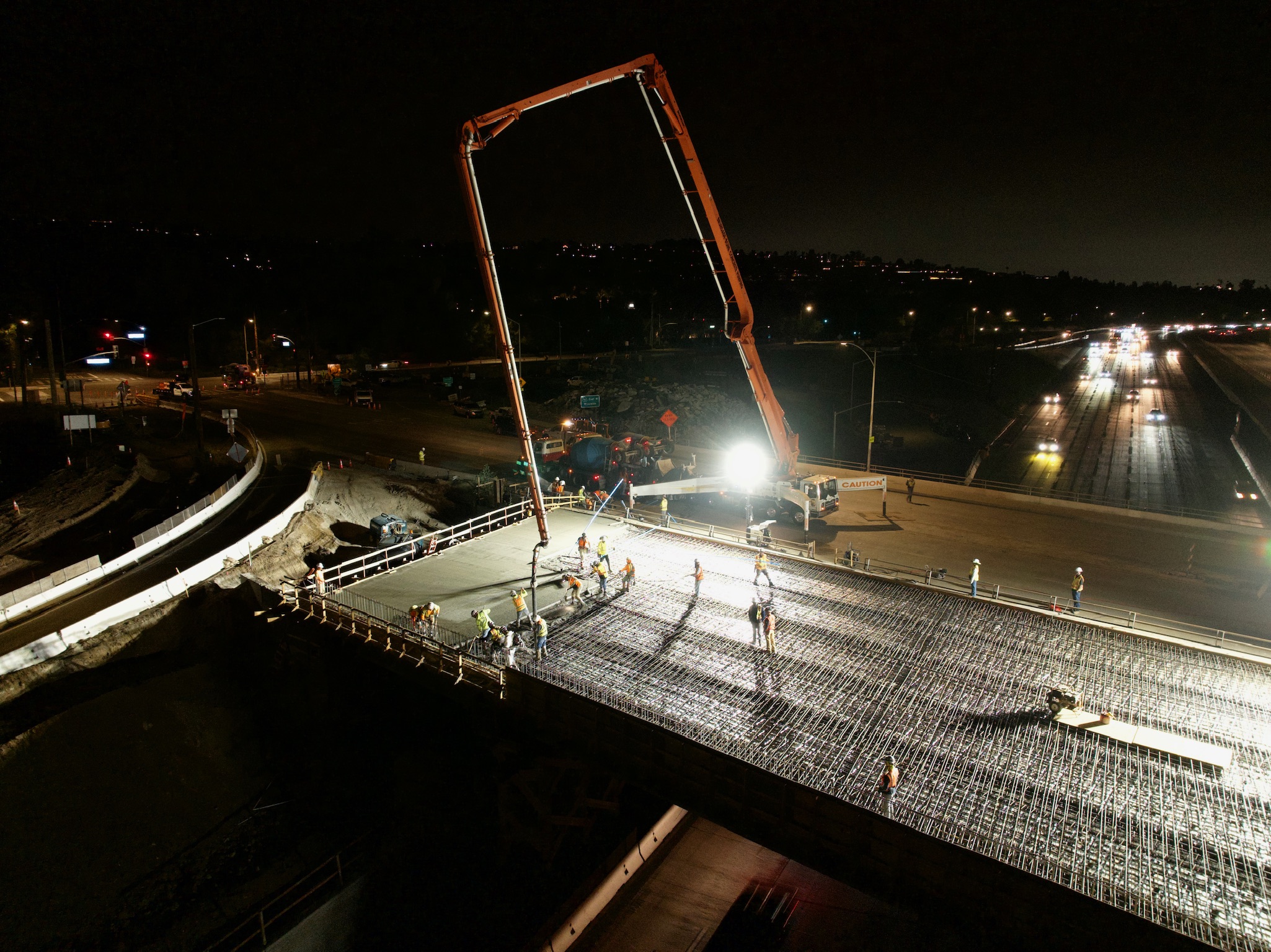
To minimize disruption to traffic and provide greater worksite safety, Granite performs much of the project work during the overnight hours.
“A lot of our work is completed at night to ensure public safety and to minimize impact on traffic,” Kuhns said. “Through active coordination with OCTA, we limit closing the SR 91 express lanes to Friday and Saturday nights. This ensures the express lanes remain open to the daily commuters when they need them most. We’re completing the project’s bridge construction in two phases to ensure we maintain maximum access for the driving public.”
Another safety challenge is performing construction over a freeway. The team built a “lost deck,” which is a temporary wooden platform, when they set the new girders.
“The plan is to keep the ‘lost deck’ in place for about four months until we construct the permanent concrete deck that the traveling public will be driving on,” Kuhns said. “This ‘lost deck’ will support our workers during the construction of the new concrete deck, as well as provide an added layer of safety to the traveling public on the freeway below.”
The ‘lost deck’ prevents falls, in the rare event that they should happen, along with catching falling tools and debris, preventing everything from landing on the freeway. Additional new traffic safety measures – sand barrels and additional orange delineation cones – have been installed in high-risk areas along the roadway.
“The orange delineators are typically every two feet, but we’ve installed additional delineators,” Kuhns said. “We’re seeing them significantly help reduce collisions in the high-risk areas by providing more warning to the drivers. Collisions at the connectors were occurring as often as once a month, but since the installation of the additional delineators, it’s now improved to only once every three to four months.”
Along with safety, Granite has focused on recycling within the project. As the team is demolishing the existing bridge and on- and off-ramps, instead of hauling off the rubble, they are reusing it onsite as fill, thanks to a crusher located on the jobsite. That simple process eliminates offsite trucking and helps reduce fuel consumption and CO2 emissions. To date, 20,000 cubic yards of demolished materials have been recycled.