

Work is underway on the Anderson Dam Seismic Retrofit Project in Morgan Hill, a major project in developing – and protecting – Santa Clara County’s water infrastructure. The contractor on this – one of the nation’s largest dam safety projects – is the joint venture of FlatironDragados Sukut ADSRP. The construction budget is $1.9 billion.
A seven-year build-out that will create 7,500 construction jobs and 17,500 additional jobs, the Anderson Dam Seismic Retrofit Project will rebuild most of the dam and spillway, install new outlet pipes, and make other safety upgrades designed to allow Anderson Reservoir to return to normal operating capacity and withstand major earthquakes.
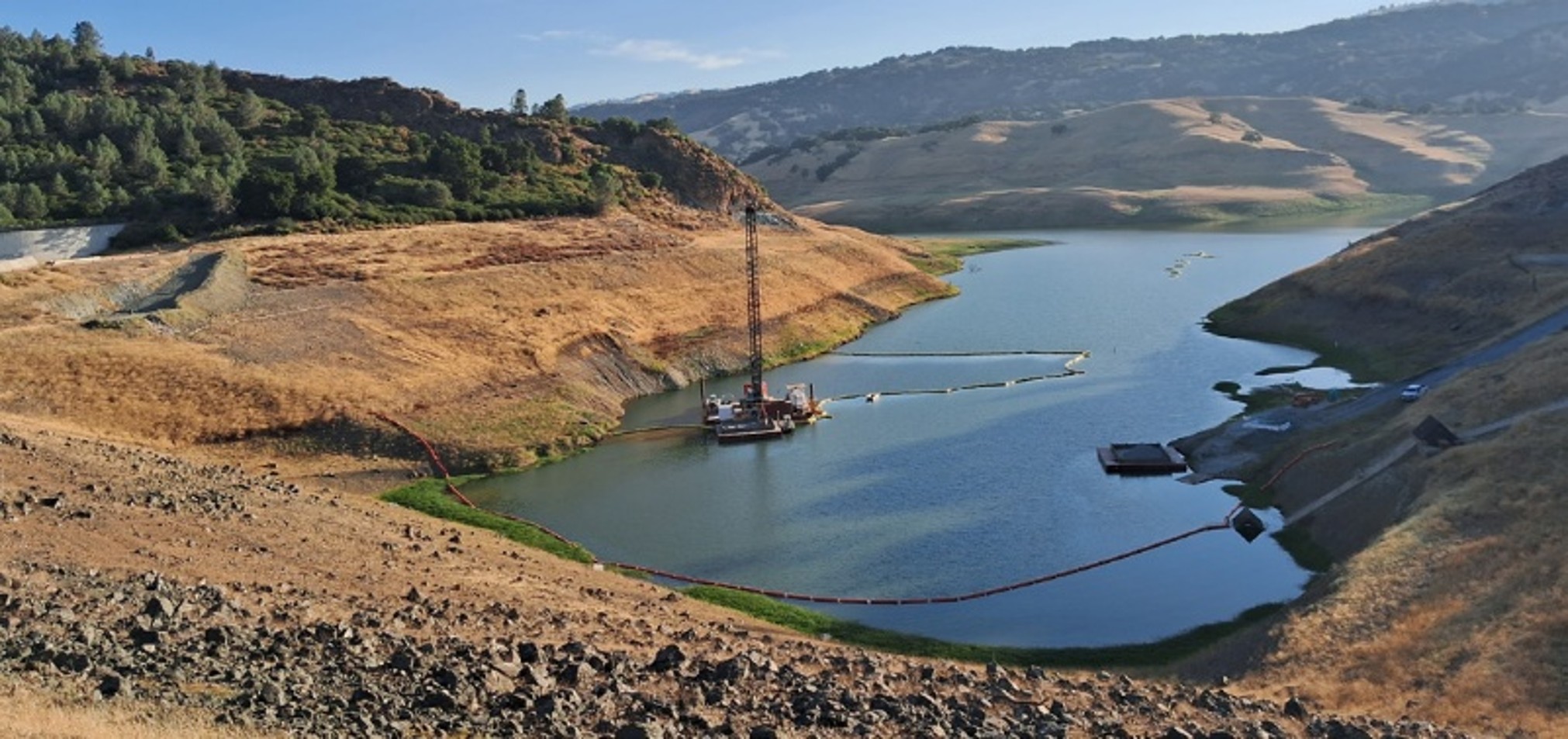
Water levels have been reduced to only 3% of capacity within the Anderson Reservoir due to seismic concerns, and to facilitate work on the Anderson Dam Tunnel Project and work on the dam itself.
Currently, Anderson Reservoir is limited to about 3% of capacity because of seismic concerns. The reservoir is a critical part of Santa Clara’s water supply system, and supplies drinking water to nearly two million county residents.
Built in 1950, Anderson Reservoir is by far the largest of Valley Water’s 10 reservoirs, able to contain the combined volume of the agency’s other nine reservoirs. At a total cost of about $2.8 billion, the Anderson Dam Seismic Retrofit Project is one of the largest and most complex infrastructure projects in Valley Water’s history.
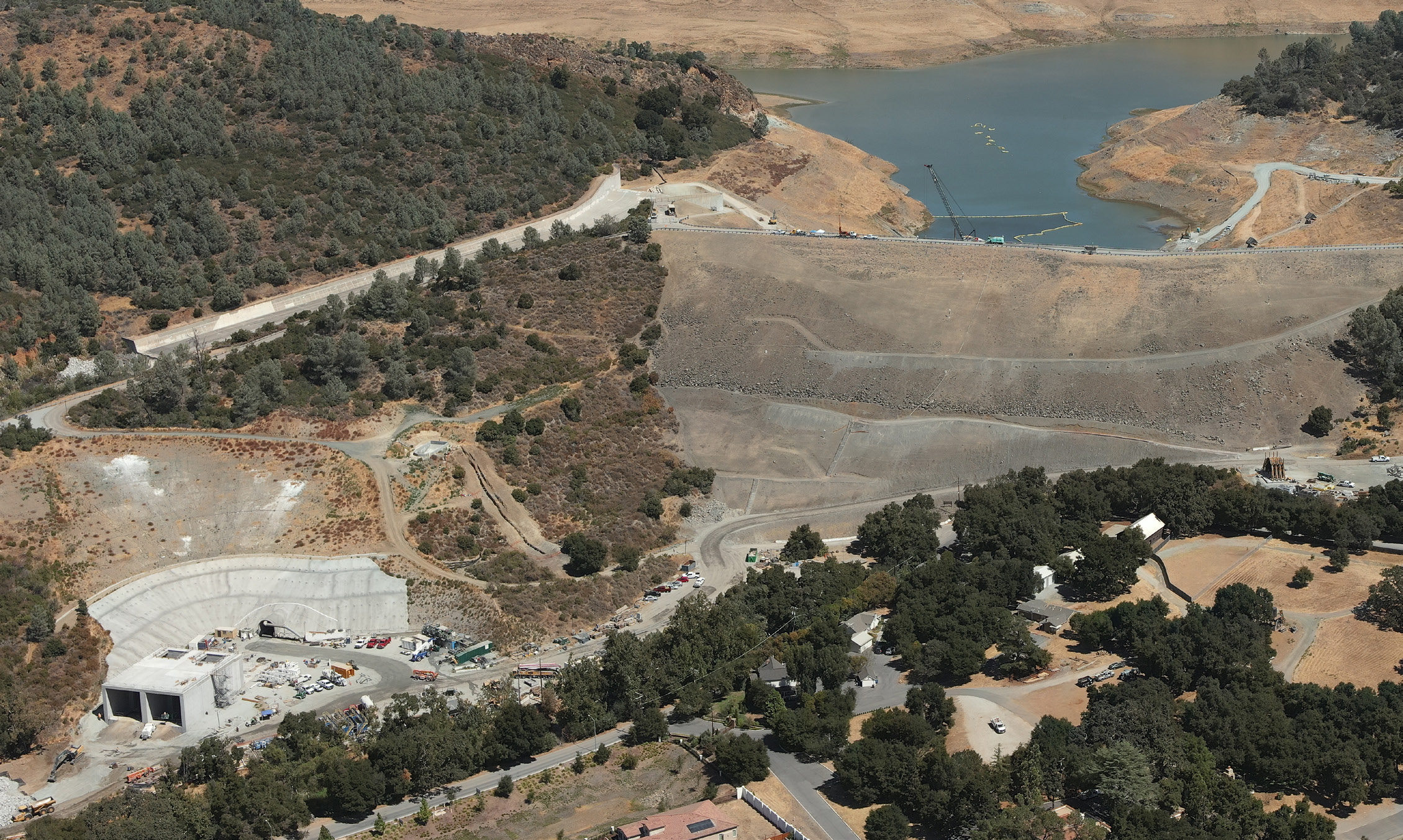
Preliminary work at the base of the dam includes concrete retaining walls and tunnel access portals.
The design of the 90,400-af, 240-foot-high Anderson Dam retrofit is a critical step in the District’s goals of providing a reliable water supply, reliable flood protection, and a healthy ecosystem to the residents of Santa Clara County.
AECOM is providing services for the seismic retrofit. The dam is near the active Calaveras Fault, and the site straddles the conditionally active Coyote Creek-Range Front (CCRF) Fault System. The seismic retrofit project includes stabilizing the embankment for the maximum credible earthquakes on the Calaveras and CCRF faults, replacing the outlet works to mitigate the fault rupture risks, and reconstructing the spillway to meet current regulatory requirements.
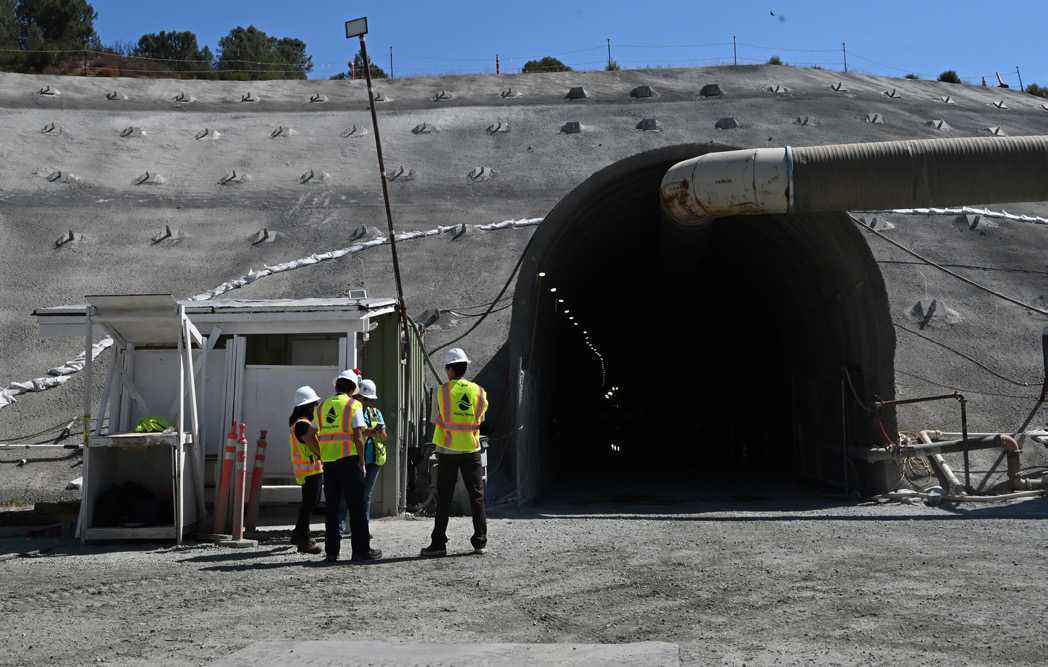
A view of the new 24-foot-diameter tunnel.
Now in its final stages and on track to be completed later this year is the Anderson Dam Tunnel Project. The new tunnel replaces the dam’s existing four-foot-diameter outlet pipe, allowing Valley Water to release larger flows into Coyote Creek during construction and better manage reservoir levels during future storms and emergencies. The new tunnel will be functional this winter and could be used if the region experiences significant rain events.
Ryan McCarter, Valley Water deputy operating officer for the Dam Safety & Capital Delivery Division, says the tunnel’s reinforced-concrete lining uses articulated joints that “can move actually a few feet without the tunnel collapsing” if seismic ground movement occurs. Crews utilized 20,909 cubic yards of high-spec reinforced concrete across 139 separate pours to line the new 1,700-foot-long tunnel.
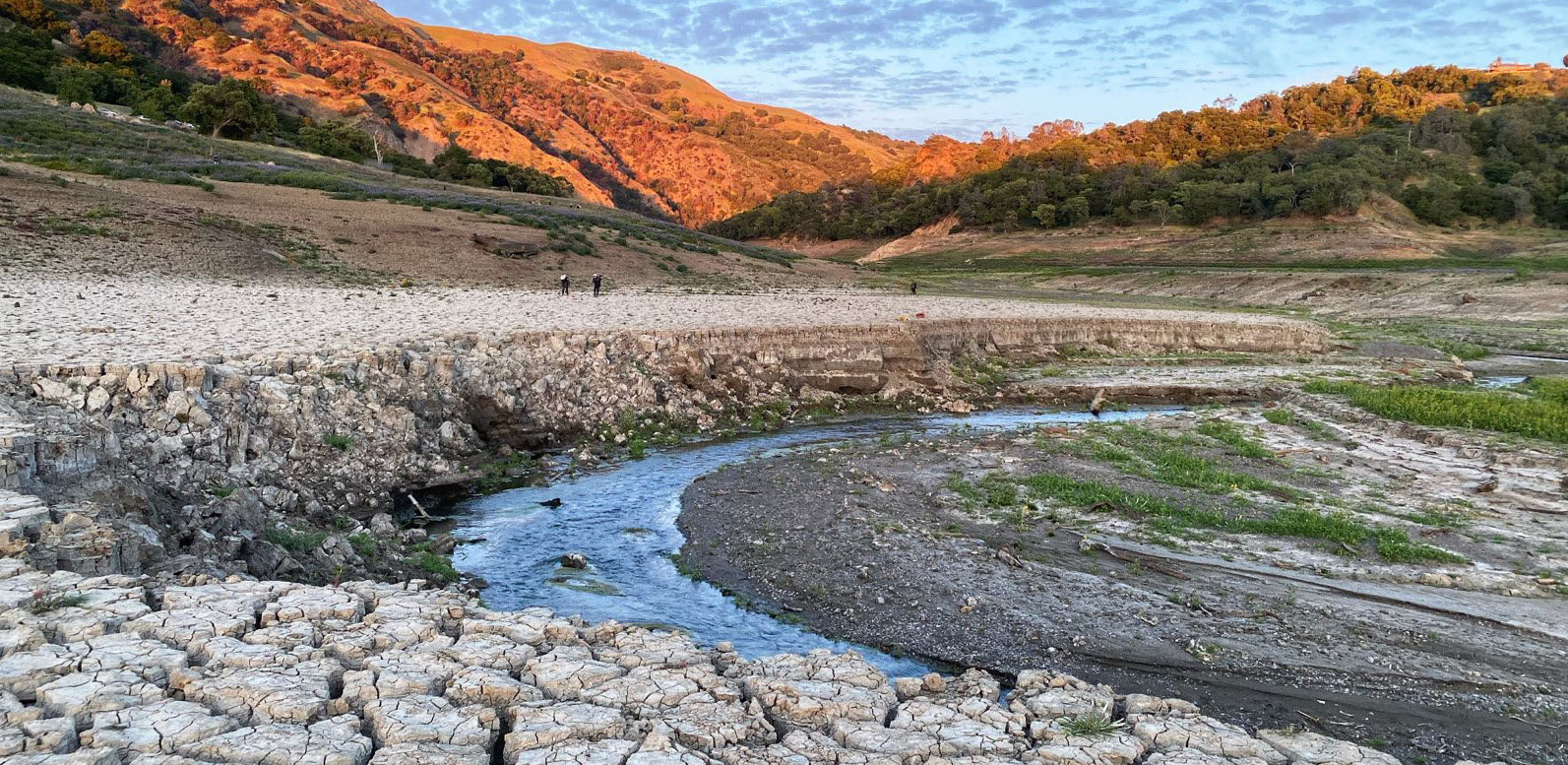
Coyote Creek
Work on the dam itself is slated to begin in early 2027, and the scope includes rebuilding most of the dam and spillway, installation of new outlet pipes, and other major safety upgrades. When the work is finished, Anderson Reservoir will return to its full operating capacity, providing improved water supply reliability, groundwater recharge, reduced flood risk, and restoration of recreation at Anderson Reservoir and along the Coyote Creek corridor.
“Rebuilding Anderson Dam is our top priority,” said Valley Water Board Chair Tony Estremera. “This milestone reflects years of hard work, collaboration, and perseverance by our staff, contractors, regulators, and community partners.”